


When a pipe leaks under the kitchen sink, it’s a nuisance. When a water pipe bursts in the attic, it’s a disaster.
Soggy insulation makes it worse. Everything you’ve stored in the attic adds to the mess. While you try to figure out what to do first, water seeps through the floor, soaking ceilings and walls below.
You’ll have to clean up the attic later. Right now, you need to get the situation under control.
We can help. Our teams here at ServiceMaster of Lake Shore take care of burst pipe water damage across Chicago every day. We’re happy to share our expertise.
Let’s cover everything you need to know about burst pipes in your attic.
Key Takeaways
- When a pipe bursts in the attic, it’s crucial to turn off the main water supply, locate and patch the broken pipe, call a licensed plumber who can replace the damaged pipe, contact your insurance carrier, and seek professional restoration services like ServiceMaster of Lake Shore for further help: 312-707-8597
- Signs of a potential water leak in the attic include mold growth, damp insulation, wet spots under pipes, musty smells, high humidity, reduced water pressure, and increased water bills.
- Preventing pipe bursts involves insulating pipes, ensuring proper attic insulation, sealing gaps, letting faucets drip during hard freezes, and regular inspections.
Why Do Pipes Burst in the Attic?
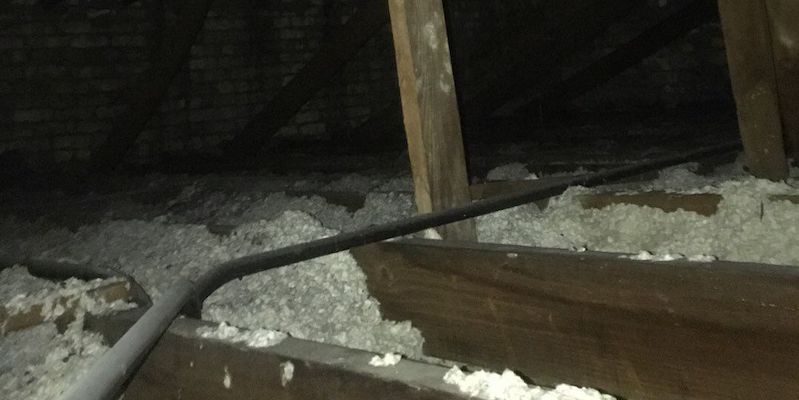
The space is great for storage, but many of your home’s water supply lines are also located in the attic. While things usually stay quiet overhead, pipes can suddenly burst and send water cascading into the rooms below.
These are the most common reasons why pipes in the attic burst.
- Frigid temperatures outside that freeze water inside attic pipes
- Water hammer generated by dishwashers and washing machines
- Corrosion inside pipes due to mineral buildup
- Older pipes that eventually weaken and develop cracks
- Damage from constant water pressure fluctuations
7 Signs of a Water Leak in Your Attic
